


Table of Contents
ntroduction: When a Clean House Is Not Truly Clean
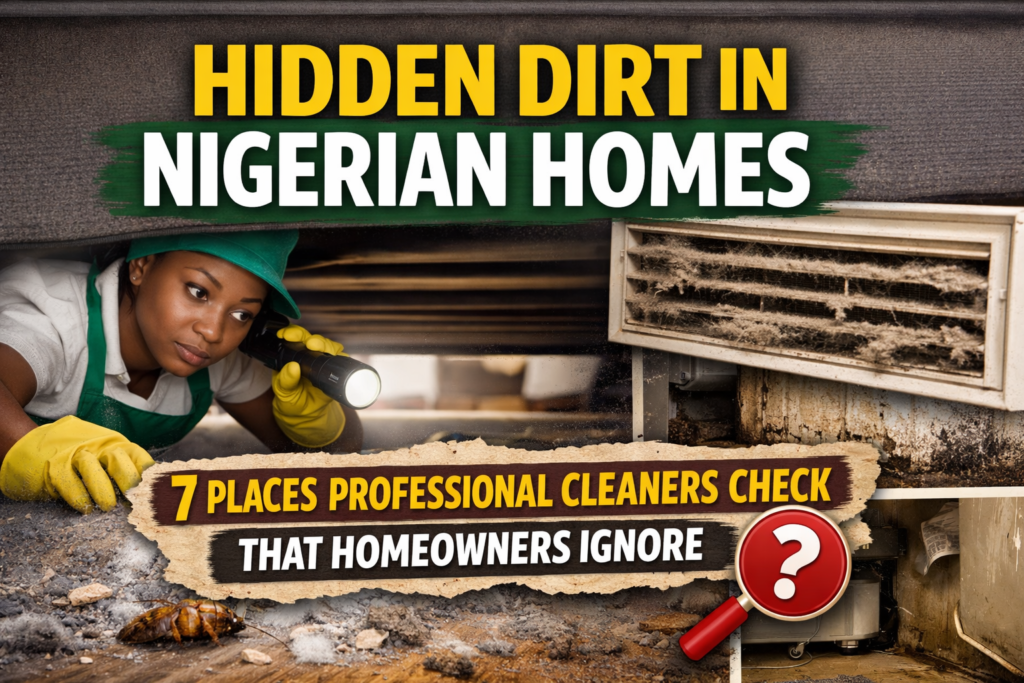
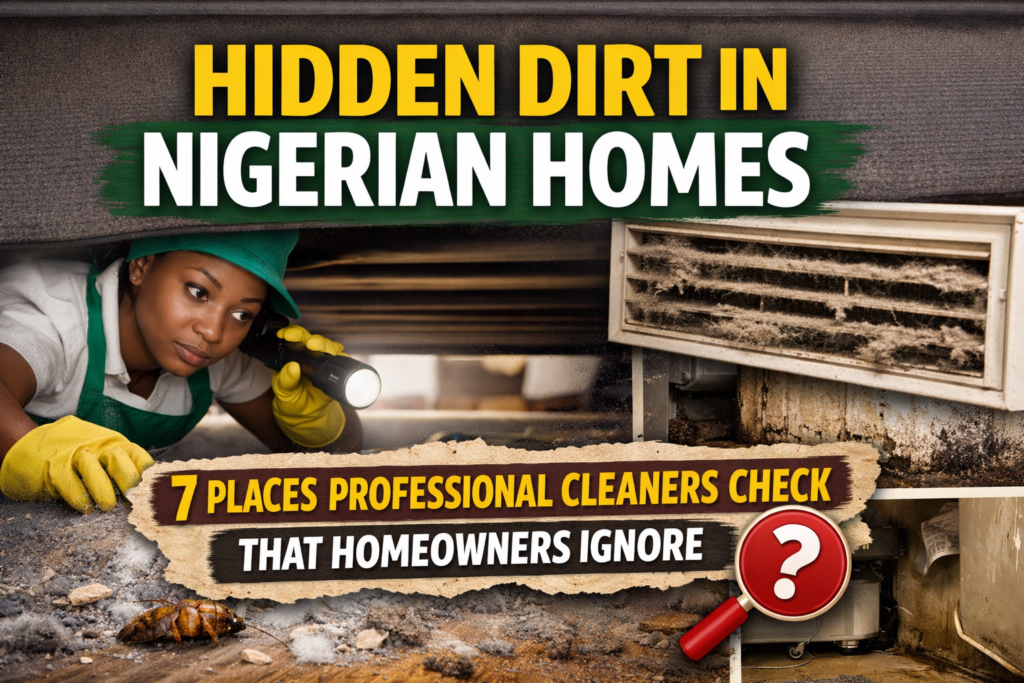
Many Nigerian homeowners take pride in keeping a neat home. Floors are swept daily, surfaces wiped, and rooms arranged. At a glance, everything looks fine. Visitors compliment the environment, and the house appears orderly. Yet, beneath this visible cleanliness lies a deeper reality that most people are unaware of: hidden dirt.
Professional cleaners understand something most homeowners don’t—cleanliness is not only about what the eyes can see. Dirt, bacteria, allergens, and grime accumulate in places that are rarely noticed, let alone cleaned. These hidden areas silently affect health, indoor air quality, pest infestation, and even how long household fittings last.
In Nigeria, factors such as dust-heavy weather, high humidity, open drainage systems, frequent power outages, and heavy foot traffic make homes especially vulnerable to hidden dirt. This is why a home can look clean yet still smell musty, trigger allergies, attract insects, or feel uncomfortable over time.
This article reveals seven critical places professional cleaners check first—areas most homeowners ignore. More importantly, it explains why these places matter, what builds up there, and why professional cleaning makes a real difference.
1. Behind and Under Heavy Furniture
Why Homeowners Ignore It
Beds, wardrobes, sofas, refrigerators, and deep freezers are rarely moved. Many homeowners assume that since these items stay in one place, dirt cannot accumulate there. Others avoid moving them due to weight or fear of scratching tiles.
What Professional Cleaners Find
Under and behind heavy furniture is one of the dirtiest zones in Nigerian homes. Professionals commonly discover:
- Thick layers of dust mixed with sand
- Hair, food crumbs, and packaging debris
- Spider webs and insect droppings
- Moisture buildup leading to mold patches
Because airflow is limited in these areas, dust settles and stays undisturbed for months—or years.
Why It Matters
Dust under furniture does not stay there forever. Each time someone walks, sits, or opens a door, fine particles rise into the air. This contributes to:
- Respiratory problems
- Persistent sneezing and coughing
- Asthma triggers in children and adults
- Musty or stale smells in bedrooms
Professional cleaners are trained to carefully move heavy items, clean underneath with industrial tools, and return them without damage. This alone can drastically improve indoor air quality.
2. Curtains, Blinds, and Window Tracks
Why Homeowners Ignore It
Curtains and blinds look clean from a distance. Window tracks are slim and inconvenient to reach. Many people assume rain and sunlight naturally keep windows clean.
What Professional Cleaners Find
Curtains and blinds act like dust magnets. Professionals often find:
- Thick dust buildup in fabric fibers
- Trapped pollen and allergens
- Soot particles from generators and traffic
- Mold spores due to humidity
Window tracks, on the other hand, collect:
- Sand and grit
- Dead insects
- Water residue that breeds bacteria
Why It Matters
Every breeze through the window sends trapped dust back into the room. This affects:
- People with allergies
- Children who play near windows
- Anyone sensitive to smells or dust
Professional cleaning involves proper curtain washing, blind detailing, and track scrubbing, restoring freshness and preventing long-term fabric damage.
3. Kitchen Cabinets, Handles, and Appliance Edges
Why Homeowners Ignore It
Kitchen cabinets are closed most of the time, and appliance edges are narrow and hidden. Most cleaning focuses on countertops and sinks.
What Professional Cleaners Find
Inside cabinets and along appliance edges, professionals uncover:
- Grease buildup mixed with dust
- Food spills and stains
- Cockroach droppings and eggs
- Sticky residue that attracts pests
These areas are especially problematic in Nigerian kitchens where cooking is frequent and often involves oil, spices, and heat.
Why It Matters
Hidden kitchen dirt is a major pest attractor. Cockroaches, ants, and rodents thrive in these unnoticed spaces. Worse still, contaminated cabinets can compromise food safety.
Professional cleaners degrease surfaces using food-safe products, eliminate pest-attracting residue, and restore hygienic storage conditions.
4. Bathroom Corners, Grout Lines, and Drain Areas
Why Homeowners Ignore It
Bathrooms are cleaned regularly, but attention is usually on visible surfaces. Grout lines, corners, and drains are tedious and easy to overlook.
What Professional Cleaners Find
In these hidden bathroom zones, professionals often find:
- Black mold in grout lines
- Soap scum buildup
- Bacteria colonies around drains
- Slippery biofilm invisible to the eye
High humidity and poor ventilation make Nigerian bathrooms especially prone to microbial growth.
Why It Matters
Bathroom mold and bacteria contribute to:
- Skin irritations
- Unpleasant odors
- Slippery surfaces and accidents
- Long-term tile and plumbing damage
Professional bathroom cleaning involves deep scrubbing, descaling, disinfecting, and mold treatment, going far beyond surface wiping.
5. Air Vents, Fans, and AC Units
Why Homeowners Ignore It
Ceiling fans and air conditioners are high up and out of sight. Many people clean the blades occasionally but ignore internal components.
What Professional Cleaners Find
Professionals frequently discover:
- Thick dust layers inside AC units
- Mold growth in drainage trays
- Bacteria circulating through airflow
- Fans redistributing dirt rather than cooling air
Why It Matters
When cooling systems are dirty, they spread contaminants throughout the home. This can cause:
- Persistent coughs
- Eye and throat irritation
- Reduced cooling efficiency
- Higher electricity bills
Professional cleaning ensures fans and AC units circulate clean, healthy air, improving comfort and energy efficiency.
6. Mattresses, Upholstery, and Soft Furnishings
Why Homeowners Ignore It
Bedsheets are washed, and sofas are brushed. Many assume the mattress or cushion itself is clean once covered.
What Professional Cleaners Find
Inside mattresses and upholstery, professionals detect:
- Dust mites
- Dead skin cells
- Sweat residue
- Bacteria and allergens
These contaminants build up silently over time.
Why It Matters
Dirty mattresses and sofas can lead to:
- Poor sleep quality
- Skin reactions
- Aggravated allergies
- Persistent odors
Professional upholstery and mattress cleaning uses deep extraction methods that remove contaminants without damaging fabric.
7. Door Frames, Switches, and High-Touch Surfaces
Why Homeowners Ignore It
These areas look clean and are rarely considered dirty zones.
What Professional Cleaners Find
High-touch points often contain:
- Germs from hands
- Body oils
- Stains invisible to the naked eye
Why It Matters
These surfaces are among the highest carriers of bacteria in a home. Regular disinfection significantly reduces illness spread.
Professional cleaners pay close attention to these details, ensuring a truly hygienic environment.
Why Professional Cleaning Makes the Difference
Professional cleaners do not just clean harder—they clean smarter. They understand:
- Where dirt hides
- How contaminants spread
- Which tools and chemicals are safe and effective
- How to clean without damaging surfaces
This expertise turns a house that only looks clean into one that is truly clean, healthy, and comfortable.
Final Thoughts: Clean Beyond What You See
If your home smells musty, attracts insects, triggers allergies, or never feels completely fresh despite regular cleaning, the problem is likely hidden dirt.
Professional cleaning is not a luxury—it is a preventive investment in health, comfort, and property value. By addressing the places homeowners ignore, professionals deliver results that everyday cleaning simply cannot.
A truly clean home is not defined by shiny floors alone, but by the absence of hidden dirt.
If you are ready to experience the difference professional cleaning makes, consider scheduling a deep cleaning that goes beyond the surface.