


Table of Contents
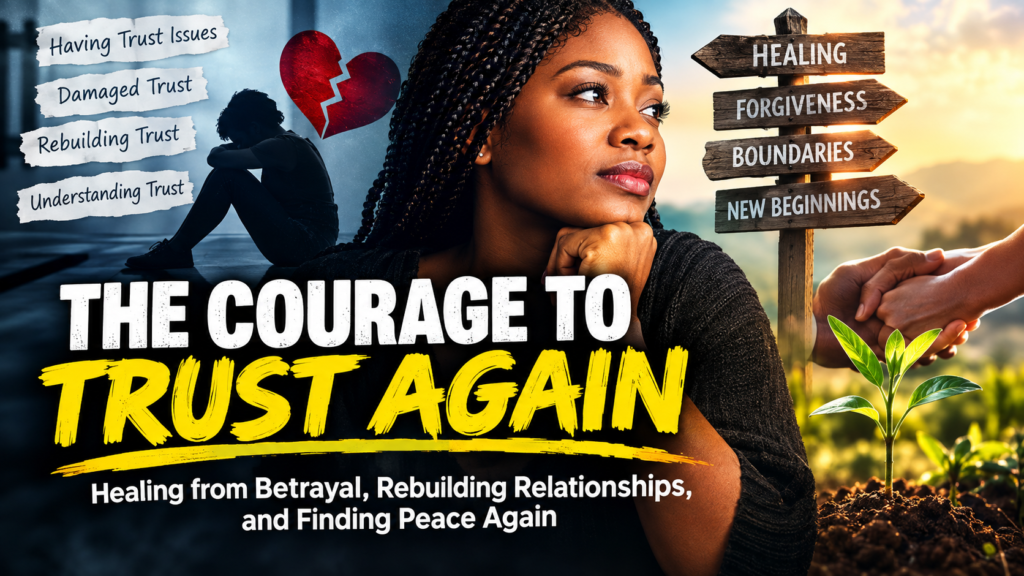
Understanding Trust, Healing from Betrayal, and Rebuilding What Was Broken
An inspiring and deeply personal reflection on trust, damaged relationships, emotional healing, forgiveness, boundaries, and the courage to open your heart again.
There are certain experiences in life that change the way we see people, relationships, and even ourselves. Some experiences make us more confident, while others leave us questioning everything we once believed. Among the most painful of these experiences is the moment when someone we trusted becomes the very person who gives us a reason to doubt trust itself. It is a difficult thing to explain to someone who has never experienced it, but when trust is broken, the damage is rarely limited to the event that caused it. It reaches into our memories, affects our present decisions, influences our expectations of the future, and sometimes changes the way we receive love from people who have done nothing to hurt us.
Trust is one of the most beautiful gifts human beings can offer one another. It is the invisible foundation upon which meaningful relationships are built, the quiet assurance that allows two people to feel safe enough to be honest, vulnerable, and emotionally present. It is what makes friendship dependable, marriage meaningful, leadership credible, family relationships secure, and human connection worth pursuing. Trust gives us the courage to share our thoughts without constantly preparing for ridicule, to express our fears without expecting exploitation, and to love without feeling that every moment of affection must be protected by suspicion.
Yet trust is also one of the most fragile things we can build, because it takes time to establish and, in certain circumstances, only a moment to damage. A lie can destroy years of confidence. A betrayal can turn beautiful memories into painful questions. An unfulfilled promise can make future promises difficult to believe. Sometimes, the greatest pain does not come from what someone did, but from the realisation that the person we trusted was capable of doing it.
And perhaps that is where the real struggle begins. When trust is damaged, we are not only trying to understand the actions of another person; we are also trying to understand what those actions mean for our own ability to trust again. We begin to question our judgment, revisit conversations, reconsider memories, and wonder whether the affection we experienced was ever as genuine as we believed. We may even begin to blame ourselves for having trusted someone who eventually disappointed us.
But here is a truth worth holding on to: the fact that someone mishandled your trust does not mean that your ability to trust was a mistake, and the fact that you have been hurt does not mean that you are destined to live a life of suspicion.
Trust can be damaged, but healing is possible. Relationships can be broken, but some can be rebuilt. People can disappoint us, but disappointment does not have to become the permanent definition of our relationships. And even when a relationship cannot or should not be restored, we can still recover the peace, confidence, and emotional freedom that betrayal attempted to take from us.
The journey begins when we stop treating trust as something we either possess completely or have lost forever, and begin to understand it as something that can be developed, tested, protected, repaired, and, when necessary, withdrawn.
1. Understanding Trust: The Foundation of Every Meaningful Relationship
Trust is much more than believing that someone is telling the truth. It is the confidence that another person will treat your vulnerability with care, respect your boundaries, honour their commitments, and act with a reasonable degree of honesty and consistency even when circumstances become difficult. Trust is the belief that you can depend on someone’s character without having to monitor every decision they make. It is the assurance that the person who knows your weaknesses will not deliberately use them against you, that the person who has access to your private life will respect its confidentiality, and that the person who promises to stand with you will make a genuine effort to do so.
In a healthy relationship, trust creates room for people to breathe. You do not have to constantly investigate every statement, interpret every silence as rejection, or assume that every disagreement is evidence of an approaching betrayal. You can express your concerns without fearing that honesty will automatically lead to punishment. You can disagree without questioning whether the relationship itself is about to collapse. You can make mistakes, apologise, learn, and continue building a connection that is strong enough to accommodate the reality of being human.
This is why trust is not simply an emotion. It is a judgment developed through experience. We may feel affection for someone almost immediately, but genuine trust usually requires time, observation, and consistency. A person may speak beautifully, make impressive promises, and demonstrate extraordinary affection, but trust becomes meaningful when their behaviour repeatedly supports the things they say. Words can introduce us to someone’s intentions, but actions help us understand their character.
Consider the difference between a person who promises to support you and someone who consistently demonstrates that support when it is inconvenient. Consider the difference between someone who apologises after hurting you and someone who takes responsibility, changes the behaviour, and becomes more considerate because they understand the impact of their actions. Consider the difference between a person who says they value your relationship and someone whose daily decisions demonstrate that the relationship matters.
Trust grows when these things begin to align.
It is also important to understand that trust does not mean believing that another person will never make a mistake. No relationship between human beings can offer that guarantee. People forget, misunderstand, become overwhelmed, make poor decisions, and sometimes fail to meet expectations despite having good intentions. Trust does not require us to pretend that people are perfect. It requires us to have reasonable confidence in their honesty, intentions, accountability, and willingness to address their mistakes.
A trustworthy person is not someone who has never disappointed anybody. A trustworthy person is someone who understands the responsibility that comes with being trusted, takes ownership when they cause harm, and makes a sincere effort to ensure that their actions remain consistent with their commitments.
When we understand trust this way, we begin to see that it is not built through grand declarations alone. It is built through ordinary decisions repeated over time. It grows in the promises kept, the truth spoken when lying would be easier, the boundaries respected when nobody is watching, and the difficult conversations handled with honesty rather than manipulation.
The strongest relationships are not necessarily those in which two people never experience conflict. They are those in which both people have developed enough trust to face conflict without deliberately destroying the very connection they are trying to protect.
2. When Trust Is Broken, the Pain Goes Deeper Than the Event
There is something uniquely painful about being hurt by someone you trusted because trust changes the meaning of the relationship. When a stranger disappoints you, you may feel frustrated or offended, but when someone close to you betrays your confidence, the pain often carries a much deeper emotional weight. The person who hurt you was not simply someone whose actions you disliked. They were someone you had allowed into a part of your life that other people could not access.
Perhaps you shared your dreams with them when you were still afraid to pursue them. Perhaps you trusted them with your financial struggles, your family challenges, your past mistakes, or your deepest insecurities. Perhaps you defended them when others questioned their character because you genuinely believed you knew who they were. You gave them the benefit of the doubt because your relationship had taught you to believe in their intentions.
Then something happened that contradicted everything you thought you understood.
A lie was discovered. A promise was broken. A private conversation was exposed. A betrayal occurred. Someone failed to stand with you when you needed them most. A person you had supported became indifferent to your struggles. Or perhaps the damage came through a repeated pattern of dishonesty, inconsistency, emotional neglect, or broken commitments that gradually exhausted your confidence.
Whatever form it takes, damaged trust often creates two different kinds of pain. The first is the pain of what happened, and the second is the pain of trying to understand how it could have happened in a relationship you believed was safe.
The second kind of pain can be particularly difficult because it forces you to revisit your understanding of the person and the relationship. You may find yourself asking whether you missed the warning signs, whether the promises were ever sincere, or whether the person you loved was simply showing you a side of themselves you had never encountered before. You may wonder whether the good memories were genuine or whether everything you experienced has now been rendered meaningless by what happened later.
But it is important to recognise that a painful ending does not automatically make every beautiful moment that came before it a lie. A person can have cared about you and still have made a deeply harmful decision. A relationship can have contained genuine affection and still have become unhealthy. A person can have contributed meaningfully to your life and still be responsible for betraying your confidence.
Acknowledging these complexities does not excuse the harm. It simply prevents the harm from rewriting your entire understanding of life.
You are allowed to appreciate what was good while being honest about what was wrong. You are allowed to acknowledge that someone mattered to you while recognising that their behaviour has made the relationship unsafe or difficult to continue. You are allowed to grieve what you lost without convincing yourself that the entire experience was meaningless.
And above all, you must remember that another person’s decision to betray your trust is not a complete statement about your worth.
Their dishonesty does not mean you were foolish for being honest. Their disloyalty does not mean you were wrong for being loyal. Their failure to appreciate your love does not mean your love was worthless. You can take responsibility for the lessons you need to learn without taking responsibility for choices that belonged to someone else.
Sometimes, healing begins with the simple but powerful realisation that you can acknowledge what happened without allowing it to define who you are.
3. Trust Issues: When Yesterday’s Pain Begins to Control Today’s Relationships
One of the most unfortunate consequences of damaged trust is that the experience does not always remain confined to the relationship in which it occurred. Sometimes, the pain follows us into new relationships and begins influencing the way we interpret people who have never harmed us. We may become suspicious of kindness, uncomfortable with emotional closeness, and fearful of making ourselves vulnerable. We may begin to expect disappointment even when there is no clear evidence that disappointment is coming.
This is how an experience of betrayal can gradually develop into a pattern of distrust.
A person who was lied to repeatedly may begin to assume that people are hiding something whenever they do not provide immediate answers. Someone who experienced infidelity may become anxious whenever a partner is unavailable. A person whose private struggles were used against them may struggle to share personal information even with people who have demonstrated genuine care. Someone who was abandoned during a difficult season may find it hard to believe that another person will remain present when life becomes complicated.
These reactions can be understandable responses to painful experiences. When something has hurt us deeply, our minds naturally attempt to recognise situations that resemble the original experience so that we can avoid being hurt again. The problem begins when the desire to protect ourselves becomes so strong that it prevents us from experiencing relationships as they actually are.
We begin responding to the present through the expectations created by the past.
A delayed response becomes evidence of rejection. A disagreement becomes a sign that the relationship is failing. A partner’s need for personal space becomes a suspicion of disloyalty. A friend’s inability to meet a commitment becomes proof that nobody can be trusted. Instead of asking what is happening in the present, we begin reacting to what happened in our past.
And the people around us may not understand why they are being questioned, doubted, or held responsible for experiences they did not create.
This is why healing from betrayal requires more than simply deciding that you will never trust anyone again. You must also learn to recognise when your fear is responding to actual behaviour and when it is responding to the memory of an earlier hurt.
There is a significant difference between noticing that someone has repeatedly lied to you and assuming that someone is lying because a previous partner deceived you. There is a difference between establishing reasonable boundaries with a person whose actions have demonstrated unreliability and demanding constant reassurance from a person who has consistently treated you with honesty and respect.
The difference matters because protection and suspicion may sometimes look similar on the surface, but they produce very different experiences.
Protection helps you recognise unhealthy behaviour and respond with appropriate boundaries. Suspicion can cause you to interpret even healthy behaviour as a potential threat. Protection allows you to remain open to evidence. Suspicion often begins with a conclusion and then searches for reasons to justify it.
You do not have to ignore your instincts, but you must learn to examine them. You can ask yourself whether the concern is based on something that has actually happened, whether the person has demonstrated a pattern of behaviour that deserves attention, and whether your response is proportionate to the situation.
You can also learn to communicate your concerns without turning them into accusations. Instead of declaring that someone cannot be trusted, you might explain that a particular experience has made you feel uncertain and that you need an honest conversation to understand what is happening.
This is not weakness. It is emotional maturity.
The goal of healing is not to become a person who never notices risk. It is to become a person who can recognise risk without assuming that every relationship is dangerous.
Your past may explain why trust is difficult for you, but it does not have to determine how every future relationship will unfold.
4. The Danger of Building Walls Around a Wounded Heart
After experiencing betrayal, many people make a silent promise to themselves: never again. Never again will I allow someone to get that close. Never again will I share so much of myself. Never again will I depend on another person. Never again will I give anyone the opportunity to hurt me in the same way.
At first, this decision can feel empowering. There is a certain relief in believing that if nobody gets close enough, nobody can hurt you deeply. You become more guarded, more independent, and less willing to reveal the parts of yourself that once made you vulnerable. You may begin to take pride in needing nobody, expecting nothing, and refusing to let anyone influence your emotions.
But there is a difference between establishing healthy boundaries and building emotional walls so high that even genuine love cannot reach you.
Boundaries help you determine what behaviour you will accept and how you will respond when those boundaries are violated. Emotional walls often prevent people from getting close enough to demonstrate whether they can be trusted in the first place. Boundaries protect your dignity while allowing healthy relationships to develop. Walls may protect you from certain forms of disappointment, but they can also isolate you from the very experiences that make life meaningful.
When you refuse to trust anybody because someone once betrayed you, you may feel that you are protecting yourself, but you are also allowing the actions of one person to influence your relationship with every other person you encounter. Someone who has never lied to you may find themselves constantly defending their honesty. Someone who genuinely wants to support you may be unable to reach you because you have already decided that dependence is dangerous. Someone who loves you may become exhausted trying to prove that they are not responsible for the pain you experienced before they arrived.
Over time, the walls intended to protect your heart can become the barriers preventing it from healing.
This does not mean you should open your life indiscriminately or ignore warning signs in the name of love. You do not owe everyone access to your private thoughts, finances, relationships, or emotional vulnerabilities. You are allowed to be selective about whom you trust, and you are allowed to take your time before allowing someone into the deeper parts of your life.
But do not confuse being careful with being permanently closed.
You can choose to trust gradually. You can share personal information in stages and observe how it is handled. You can allow someone to demonstrate reliability before making significant emotional or financial commitments. You can maintain your independence while still allowing healthy support and companionship into your life.
You can learn to say, “I am willing to know you, but I need time to feel safe.”
That is a reasonable boundary.
You do not have to surrender your heart in a single moment to prove that you are capable of loving again. You do not have to pretend that your past never happened. You simply need to remain open to the possibility that the person standing before you deserves to be understood through their own character and actions rather than through the mistakes of someone who came before them.
Your heart deserves protection, but it also deserves the opportunity to experience genuine connection again.
5. Rebuilding Trust Begins With Honesty, Not Promises
When trust has been broken in a relationship, one of the first things people often attempt is to repair the damage through words. The person who caused the hurt may apologise, make promises, explain their intentions, and assure the injured person that the mistake will never happen again. They may express regret and insist that the relationship is too important to lose.
These expressions can matter. A sincere apology can be an important first step towards healing, particularly when it acknowledges the harm that has been caused. But words alone cannot rebuild what actions have damaged.
Trust is established through evidence, and when that evidence has been contradicted, it must be restored through consistent behaviour.
If someone has lied, rebuilding trust requires a commitment to honesty even when the truth is uncomfortable. If someone has repeatedly broken promises, rebuilding trust requires a realistic approach to commitments and a willingness to follow through. If someone has violated a boundary, rebuilding trust requires respecting that boundary without resentment or attempts to pressure the injured person into abandoning it.
The process begins when the person responsible for the damage stops focusing exclusively on the consequences they are experiencing and starts taking responsibility for the pain they have caused.
There is a difference between saying, “I am sorry that you are upset,” and saying, “I understand that my decision hurt you, damaged your confidence in me, and created uncertainty about whether you can feel safe in this relationship. I take responsibility for what I did, and I understand that my apology does not automatically restore your trust.”
The first statement can sound like an attempt to manage another person’s reaction. The second acknowledges the actual harm and recognises that the injured person has a right to their own healing process.
A sincere apology should not come with an immediate demand for forgiveness. It should not be followed by anger because the injured person is still struggling. It should not become a tool for pressuring someone to return to normal before they are emotionally ready. And it should not be used to avoid meaningful conversations about what happened and how similar harm can be prevented.
If you are the person who broke the trust, you must understand that your regret does not automatically determine the pace of another person’s recovery. You may genuinely wish to move forward, but the person you hurt may still be trying to understand what the experience means for their sense of safety.
Give them room to ask questions. Be willing to listen without becoming defensive. Accept that rebuilding trust may require changes to certain behaviours, greater transparency, clearer communication, or professional support where appropriate.
Most importantly, understand that accountability is not a temporary performance designed to win someone back. It is a commitment to becoming more trustworthy whether or not the relationship returns to its previous condition.
The real evidence of remorse is not how emotional someone becomes when confronted with the possibility of losing a relationship. It is how responsibly they behave after the immediate crisis has passed.
An apology may open the door to reconciliation, but consistent integrity is what gives trust a reason to return.
6. Rebuilding Trust Is a Process That Requires Two Willing Hearts
One of the most difficult realities about repairing a damaged relationship is that one person cannot rebuild trust on behalf of both people. The person who caused the damage has a responsibility to acknowledge the harm, demonstrate change, and respect the boundaries of the injured person. But the injured person also needs the freedom to decide whether they are willing and able to participate in the process of rebuilding.
Trust cannot be restored through force, emotional pressure, threats, manipulation, or the insistence that the relationship must continue because of its history. A relationship may have lasted for many years and still require honest examination after a serious betrayal. The number of memories two people share does not automatically resolve the questions created by broken trust.
Rebuilding requires a shared willingness to face the truth about what happened and make deliberate decisions about what happens next.
For the person who caused the damage, this means accepting that the relationship may not return to its previous form immediately, or perhaps ever. There may be difficult conversations that need to take place more than once. There may be questions that arise unexpectedly. There may be moments when the injured person remembers what happened and experiences renewed sadness, anger, or uncertainty. These moments do not necessarily mean that progress has been abandoned.
Healing is rarely a perfectly straight line. A person may feel confident one day and uncertain the next. They may appreciate the changes they see while still struggling with the memory of the original hurt. They may want to move forward but feel frightened when circumstances remind them of what happened.
For the injured person, rebuilding trust means learning to recognise genuine change without feeling compelled to deny the pain of the past. It means allowing evidence to matter, while still paying attention to personal boundaries and emotional wellbeing. It means deciding whether the relationship is becoming healthier rather than simply hoping that it will.
Both people must be willing to communicate honestly about their needs and expectations. They must be willing to acknowledge when a particular approach is not working and consider what changes may be necessary. They must understand that rebuilding a relationship is not about returning to the exact conditions that existed before the betrayal. It is about creating a healthier foundation in which the original problems can be addressed rather than repeated.
Sometimes, the relationship that emerges from this process may become more honest, more emotionally mature, and more intentional than the relationship that existed before the damage occurred. That is possible when both people genuinely learn from the experience and commit to meaningful change.
But reconciliation is not always possible, and it is not always the healthiest outcome. If the person responsible for the harm refuses accountability, continues the damaging behaviour, or uses the process of reconciliation to exert control, the injured person may need to step away.
A relationship cannot become healthy through the determination of only one person to make it work.
You can forgive someone and still recognise that continued closeness is not good for you. You can appreciate the history of a relationship and still decide that its future is no longer sustainable. You can wish someone well without giving them continued access to your private life.
Trust is valuable, and so is your peace.
7. Forgiveness Does Not Mean You Must Forget, Excuse, or Reconcile
There is a great deal of misunderstanding surrounding forgiveness, particularly when it comes to broken trust. People sometimes believe that if you have truly forgiven someone, you should no longer feel hurt, ask questions, maintain boundaries, or hesitate to restore the relationship. They may tell you that holding on to the memory of what happened means you have not genuinely forgiven the person.
But forgiveness is not the same thing as forgetting, and it is certainly not the same thing as pretending that the harm never occurred.
Forgiveness is a deeply personal process through which a person works towards releasing the desire to remain consumed by resentment, revenge, or the pain of what happened. It can involve acknowledging the reality of the harm, grieving what was lost, and gradually deciding that the person who hurt you will not be allowed to determine the emotional direction of your entire future.
It does not require you to deny the truth.
You can forgive someone and still remember what they did. You can forgive someone and still recognise that their behaviour was unacceptable. You can forgive someone without immediately trusting them again. You can forgive someone without restoring the relationship to its previous condition.
These distinctions are important because trust and forgiveness serve different purposes. Forgiveness concerns how you respond to the hurt and the person who caused it. Trust concerns whether there is sufficient evidence to rely on that person’s character and behaviour in the future.
You may choose to forgive someone because you no longer want to carry the emotional burden of resentment. But whether you allow that person back into your life in the same way should depend on factors such as accountability, demonstrated change, the nature of the harm, and your own wellbeing.
You do not have to give someone access to your life simply because you have released your anger towards them.
Nor should forgiveness be used as a weapon against people who are still healing. Telling an injured person that they must forgive immediately can create additional pressure and make them feel guilty for experiencing normal emotions. People process betrayal differently, and some experiences require considerable time, reflection, and support before forgiveness becomes possible.
Give yourself permission to heal honestly.
If your faith teaches you the importance of forgiveness, allow that conviction to guide you towards compassion and emotional freedom without using it to justify continued exposure to harmful behaviour. If you are the person seeking forgiveness, respect the fact that the injured person has their own journey and cannot be forced to arrive at your preferred conclusion.
Sometimes, the most meaningful form of forgiveness is not a restored relationship but the freedom to move forward without allowing bitterness to become the centre of your identity.
You can remember what happened without living inside it. You can learn from the experience without allowing it to poison every future connection. You can release the burden of revenge while maintaining the wisdom to protect yourself.
Forgiveness may open a path towards peace, but reconciliation requires additional conditions, and trust must be earned through consistent conduct.
8. Learning to Trust Yourself Again After Betrayal
When people talk about broken trust, they usually focus on the person who caused the harm. But there is another relationship that can be deeply affected by betrayal: the relationship we have with ourselves.
After being deceived, you may begin to question your judgment. You may wonder how you failed to recognise the warning signs, why you believed certain promises, or why you continued trusting someone whose behaviour eventually disappointed you. You may revisit decisions and conversations with the benefit of information you did not possess at the time, then condemn yourself for not knowing what you could not reasonably have known.
This can create a painful cycle in which the person who was hurt begins blaming themselves for having been vulnerable.
You may tell yourself that you should have been more careful, that you should never have believed the person, or that you were foolish for giving them another opportunity. While reflection can help us recognise patterns and make better decisions, excessive self-blame can prevent us from seeing the situation clearly.
There is an important distinction between learning from your experience and punishing yourself for not having predicted another person’s choices.
You can acknowledge that you overlooked certain warning signs without concluding that you deserved to be betrayed. You can recognise that a boundary should have been established earlier without believing that the other person’s decision to violate your trust was your fault. You can decide to be more discerning in future relationships without becoming ashamed of the kindness, openness, or generosity that once characterised your behaviour.
Trusting yourself again begins with understanding that good judgment does not mean having perfect knowledge of other people. It means learning how to evaluate evidence, recognise uncertainty, establish boundaries, and respond responsibly when new information becomes available.
You are allowed to make decisions based on what you reasonably understand at the time. You are allowed to believe someone who has consistently demonstrated honesty. You are allowed to offer opportunities for trust to grow without having a guarantee of the outcome.
And when an experience teaches you something new, you can use that knowledge to make better decisions without condemning the person you were before you learned it.
Begin by paying attention to your own needs and feelings. If something makes you uncomfortable, take time to understand why. If a pattern of behaviour concerns you, do not dismiss it simply because you want the relationship to succeed. If you need clarification, ask for it. If a boundary is necessary, communicate it. If a situation repeatedly undermines your peace or dignity, recognise that you have the right to reconsider your participation.
As you begin making decisions that reflect your values and protect your wellbeing, you gradually rebuild confidence in your own ability to navigate relationships.
You do not have to become suspicious of everyone to demonstrate that you have learned from your past. You simply need to become more aware, more intentional, and more willing to act on the information available to you.
The goal is not to become incapable of being hurt. No meaningful relationship can offer that guarantee. The goal is to develop enough self-trust that even if disappointment occurs again, you will know that you can respond with courage, wisdom, and self-respect.
9. Healthy Trust Requires Boundaries, Communication, and Consistency
One of the most practical lessons we can learn about trust is that love and goodwill are not sufficient substitutes for healthy boundaries. Two people may genuinely care about each other and still require clear agreements about privacy, communication, money, friendships, responsibilities, and the ways they handle conflict.
Boundaries are not necessarily signs of distrust. In healthy relationships, they can provide the clarity that allows trust to grow. When people understand what is expected of them, what behaviour is unacceptable, and how concerns can be addressed, they have a stronger foundation for managing disagreements and preventing avoidable harm.
Consider a relationship in which one person values privacy while the other expects complete access to every conversation and personal device. Without honest communication, this difference can become a source of suspicion and conflict. But when both people can explain their expectations, discuss their concerns, and establish mutually respectful agreements, they have an opportunity to develop a healthier understanding of what privacy and trust mean within their relationship.
The same principle applies to finances, friendships, work commitments, family responsibilities, and other areas of life. Trust becomes stronger when expectations are communicated clearly and both people demonstrate a willingness to honour reasonable commitments.
Communication is particularly important because silence can sometimes create room for assumptions. When something is bothering you, expressing it respectfully gives the other person an opportunity to understand your experience. When you have made a mistake, acknowledging it promptly can prevent a small issue from developing into a larger breach of confidence. When circumstances change and you cannot fulfil a commitment, communicating honestly allows the other person to make informed decisions.
Consistency is equally important. A person who behaves respectfully only when there is a risk of losing the relationship has not yet demonstrated the kind of dependable character that sustains trust. Genuine consistency means behaving with integrity even when the immediate consequences are not obvious.
In marriage, this may involve being honest about financial decisions, respecting agreed boundaries, making time for meaningful conversations, and treating one another with dignity during disagreements. In friendship, it may involve protecting private information, showing up when possible, being honest about limitations, and refusing to exploit vulnerability. In leadership, it may involve keeping commitments, giving accurate information, accepting responsibility, and treating people fairly even when they lack the power to challenge you.
Trust grows when people discover that they do not have to constantly negotiate for basic honesty and respect.
It also grows when mistakes can be addressed without fear of humiliation or retaliation. A healthy relationship allows people to admit when they are wrong, ask for clarification, and learn from difficult experiences without automatically being labelled as untrustworthy for every mistake.
The objective is not to create a relationship in which nobody ever makes an error. It is to create a relationship in which honesty, responsibility, and mutual respect are strong enough to help people address errors before they become destructive patterns.
10. Do Not Allow Someone Else’s Betrayal to Steal Your Capacity to Love
Perhaps one of the most heartbreaking consequences of damaged trust is the way it can gradually change a person’s understanding of love. Someone who was once generous with affection may become emotionally distant. Someone who once believed in the beauty of companionship may begin to regard relationships as unnecessary risks. Someone who was naturally expressive may become reluctant to communicate their feelings because they fear that vulnerability will eventually be used against them.
The danger is that the person who caused the original hurt may no longer be present, yet their actions continue influencing the injured person’s emotional life.
Years after the relationship has ended, the fear remains. A new person enters your life with genuine intentions, but you find yourself waiting for the moment when they will disappoint you. They express affection, but you question whether it is sincere. They make a commitment, but you expect them to break it. They attempt to understand you, but you struggle to believe that their interest is genuine.
Without realising it, you may be allowing an old experience to determine the possibilities of a new relationship.
This is why emotional healing matters so deeply. It is not simply about moving on from a person or forgetting a painful event. It is about recovering your ability to experience life without allowing the past to dominate every new possibility.
You deserve to experience relationships in which kindness does not automatically create suspicion, affection does not feel like a threat, and vulnerability can gradually develop within a foundation of mutual respect. You deserve friendships in which you can be honest, partnerships in which you can communicate your needs, and connections in which you are valued for who you are rather than manipulated for what you can provide.
But these experiences require courage.
You must be willing to acknowledge that trusting again carries uncertainty. You cannot demand a guarantee that no future relationship will ever disappoint you. You cannot control every decision another person will make. What you can control is the pace at which you build trust, the boundaries you establish, the standards you maintain, and the decisions you make when someone’s behaviour provides evidence that the relationship is no longer healthy.
You can remain open without being careless. You can be loving without abandoning your self-respect. You can be generous without allowing people to exploit you. You can believe in the possibility of meaningful relationships while understanding that not every person you meet will be capable of offering the honesty and consistency you need.
The courage to trust again is not the belief that nobody will ever hurt you. It is the decision that the possibility of being hurt will not prevent you from experiencing the beauty of genuine human connection.
Do not let one person’s inability to honour your trust become the reason you refuse to recognise the goodness of others.
Your heart is allowed to heal. Your confidence is allowed to return. Your future is allowed to contain relationships that are healthier than the ones that wounded you.
And you are allowed to love again without pretending that you have never been hurt.
11. Sometimes, the Most Courageous Decision Is to Walk Away
In conversations about rebuilding trust, it is easy to become so focused on forgiveness and reconciliation that we overlook an equally important truth: not every relationship should be rebuilt.
There are situations in which the damage is repeated, accountability is absent, and promises become a recurring substitute for genuine change. There are relationships in which one person continually violates boundaries, manipulates the emotions of the other, or uses affection as a way to regain access without accepting responsibility. There are circumstances in which continued attempts to restore trust expose a person to further harm.
In such situations, walking away may be a necessary act of self-preservation.
It is important to understand that the length of a relationship does not automatically determine whether it should continue. A relationship may have existed for many years and still become unhealthy. Two people may share children, business interests, family connections, or significant memories, yet still need to establish distance or reconsider the nature of their relationship. History deserves respect, but history alone cannot guarantee a healthy future.
Sometimes, people remain in damaging relationships because they fear that leaving means they have failed. They may believe that if they were more patient, more forgiving, more understanding, or more loving, the other person would eventually change. They may feel responsible for rescuing the relationship, even when the other person repeatedly refuses to participate in the work required to make it healthy.
But love cannot replace another person’s willingness to take responsibility for their behaviour.
You cannot force someone to become honest. You cannot make someone respect your boundaries by explaining them endlessly. You cannot rebuild trust on behalf of a person who continues to undermine it. You can communicate your concerns, establish expectations, offer reasonable opportunities for change, and seek appropriate support, but the other person must ultimately choose how they behave.
Walking away does not mean that you never cared. It does not mean that the relationship contained no good memories. It does not mean that you have failed to forgive. It may simply mean that you have recognised the limits of what you can responsibly continue to accept.
If a relationship involves threats, coercion, violence, or serious emotional or financial abuse, your immediate safety and wellbeing should take priority over attempts at reconciliation. In such circumstances, seek support from trusted people and appropriate professional or local services, and avoid confronting the person in ways that could increase the danger.
There is strength in recognising when a relationship is no longer safe or sustainable.
You can grieve what you hoped the relationship would become while accepting what it has actually been. You can appreciate the lessons you learned without remaining in a situation that repeatedly harms you. You can wish someone healing and growth without making yourself responsible for providing the environment in which they achieve it.
Sometimes, the most important relationship you need to rebuild after betrayal is the relationship you have with yourself.
And sometimes, choosing peace is not the end of your capacity to love. It is the beginning of learning how to love without abandoning yourself.
12. Trust Is a Gift, but Trustworthiness Is a Responsibility
As we reflect on trust, it is important to turn the conversation inward. We often spend considerable time examining the people who have disappointed us, asking why they lied, why they broke their promises, why they failed to stand by us, or why they did not appreciate the confidence we placed in them. These questions are understandable, but there is another question every one of us must be willing to ask: What kind of person am I becoming in the lives of those who trust me?
It is easy to desire trustworthy people while overlooking the responsibility of becoming trustworthy ourselves. We want others to keep their promises, but do we honour the commitments we make? We expect people to protect our private information, but do we handle the vulnerabilities they share with us responsibly? We want others to be honest about their mistakes, but are we willing to admit when our own actions have caused harm?
Trust is a gift that people extend to us, but it is also a responsibility we must learn to carry.
When someone shares a personal struggle with you, remember that their openness is not an invitation to use their weakness for entertainment or advantage. When someone depends on your commitment, understand that your reliability may influence their ability to plan and make important decisions. When you occupy a leadership position, recognise that people may place confidence in your words and decisions, and that confidence should never be treated carelessly.
Being trustworthy means understanding that integrity is not determined only by what we do when our actions are visible. It is also demonstrated through the choices we make when we could easily avoid accountability. It is reflected in the way we speak about people who are not present, the way we handle money that does not belong to us, the way we respond when our mistakes are exposed, and the way we treat people who have less power or influence than we do.
It also means recognising that our intentions do not erase the impact of our behaviour. We may not intend to hurt someone, but if our actions have caused harm, we have a responsibility to listen, understand, and respond appropriately. A trustworthy person does not insist that good intentions should automatically cancel another person’s pain.
There is something deeply valuable about becoming a person whose words carry weight because they are supported by consistent conduct. A person who does not make promises carelessly, who communicates honestly when circumstances change, who takes responsibility when mistakes occur, and who understands that trust should never be exploited.
Imagine the difference it would make if more marriages were built on genuine honesty, if more friendships were protected by loyalty, if more leaders treated public confidence as a responsibility, and if more people understood that the privilege of being trusted should inspire them to behave with greater integrity.
We cannot control whether every person we encounter will honour our trust. But we can make a meaningful contribution to the quality of the relationships we build by becoming people whose actions give others a reasonable basis for confidence.
Let your presence become a source of emotional safety rather than uncertainty. Let your words be dependable. Let your apologies be sincere. Let your commitments be realistic. And when you make a mistake, let your willingness to take responsibility demonstrate that you value the relationship more than your desire to appear flawless.
Trustworthy people are not perfect people. They are people who understand that the confidence others place in them is valuable enough to be handled with care.
Conclusion: Your Heart Can Be Wise Without Becoming Hardened
At the end of everything, trust remains one of the most courageous decisions we make as human beings. Every meaningful relationship requires some degree of vulnerability, and vulnerability always carries uncertainty. We cannot know every thought another person will have, every decision they will make, or every circumstance that may test the relationship. We cannot guarantee that every promise will be kept or that every person who enters our lives will remain in them forever.
But the uncertainty of relationships does not make them meaningless. It makes honesty, integrity, discernment, and mutual respect even more valuable.
If you have been betrayed, allow yourself to acknowledge the pain without becoming ashamed of it. You do not have to pretend that everything is fine when it is not. You do not have to rush your healing to satisfy someone else’s expectations. You do not have to restore a relationship before you have had the opportunity to understand what happened and decide what is healthy for you.
Take the time you need to rebuild your confidence. Learn from the experience without allowing it to destroy your belief in genuine connection. Establish boundaries that protect your dignity, and remain willing to recognise people whose conduct demonstrates honesty, consistency, and care.
If you have broken someone’s trust, understand that your regret is only the beginning of your responsibility. Do not demand immediate forgiveness or assume that an apology automatically restores what was lost. Become willing to listen, accept the consequences of your decisions, and demonstrate through your actions that you understand the seriousness of the harm you caused.
And if you are fortunate enough to be in a relationship where trust is still strong, do not take it for granted. Appreciate the people who have given you reasons to feel safe. Honour the promises you make. Communicate when things become difficult. Protect the confidence people place in you, and never assume that a relationship is too secure to require care and attention.
Remember that the purpose of healing is not to become a person who can never be hurt again. That would require closing yourself off from the very experiences that make love, friendship, and companionship meaningful. The purpose of healing is to become a person who can recognise danger without living in constant fear, establish boundaries without becoming emotionally unavailable, and love sincerely without surrendering personal dignity.
You can become wiser without becoming bitter. You can become more discerning without becoming suspicious of everyone. You can forgive without excusing harmful behaviour. You can walk away without allowing hatred to define your future. You can rebuild a relationship when there is genuine accountability, and you can begin a new chapter when reconciliation is no longer possible.
Most importantly, you can trust yourself to navigate the uncertainties of life with greater wisdom than you possessed before.
Perhaps the greatest victory after betrayal is not proving that the person who hurt you was wrong. It is reaching a place where their actions no longer determine how you see yourself, how you approach every new relationship, or how much joy you allow into your life.
One day, you may discover that you can speak about the experience without feeling the same weight in your heart. You may find yourself appreciating the lessons without wishing that the pain had never occurred. You may meet people whose honesty gradually reminds you that trust can be earned, that love can be healthy, and that not every relationship is destined to repeat the mistakes of the past.
You may even look back and realise that the experience, painful as it was, taught you to understand yourself more deeply, establish healthier boundaries, recognise the value of genuine character, and appreciate relationships in which trust is mutual.
That does not mean the betrayal was necessary or justified. It means that your life can still contain growth and beauty after something painful has happened.
Do not allow a broken experience to convince you that your entire future must remain broken.
Your heart can heal. Your judgment can grow stronger. Your confidence can return. Your relationships can become healthier. And your capacity to love can survive the experiences that once made you question whether love was worth the risk.
Trust again, but trust with wisdom. Love again, but love with self-respect. Forgive when you are ready, but remember that forgiveness does not require you to abandon your boundaries. Give people the opportunity to demonstrate their character, but never ignore consistent evidence about how they choose to treat you.
And as you move forward, remember this:
You do not have to trust everyone to remain a trusting person. You do not have to reconcile with everyone to become a forgiving person. And you do not have to remain in every relationship to prove that your love was genuine.
Sometimes, healing means rebuilding what was broken. Sometimes, it means accepting that what was broken cannot be restored. And sometimes, it means discovering that even after the deepest disappointment, you still have the courage to believe in the possibility of something better.
Let your experiences make you wiser, not colder. Let your boundaries protect your peace, not imprison your heart. Let your past teach you, but never allow it to become the only voice that determines your future.
Because trust is more than the willingness to believe in another person.
It is the courage to remain open to life while possessing the wisdom to protect what is precious.
And perhaps that is the most beautiful form of strength a person can develop: a heart that has experienced disappointment, learned discernment, embraced healing, and still possesses the courage to love, to hope, and to trust again.