

Table of Contents
Introduction
Bed bugs are small, flat, reddish-brown insects that feed on human blood while we sleep. Infestations have resurged worldwide in recent decades, including in Nigerian cities like Lagos. Therefore, this article Top 5 Signs You Have Bed Bug Infestation in Your Home is needed like never before. Also, these pests are excellent hitchhikers – they travel in luggage, second-hand furniture, and clothing – so any home can get them. Although they don’t spread disease, bed bugs cause itching, loss of sleep, and stress. Early detection is key. This guide helps Lagos-area homeowners recognize the Top 5 five signs of bed bug infestation in you home so they can act quickly. Each sign below includes what it looks like, where to check, and why it indicates bed bugs.

Sign 1: Unexplained Red, Itchy Bite Marks on Your Skin (Clustered)
What to look for (Top 5 five signs of bed bug infestation in you home): Small, red, itchy welts or bumps on skin after sleeping, often in a line or cluster. The bites may have a tiny dark spot in the center. They are most common on areas exposed in bed: arms, shoulders, neck, or legs. Unlike mosquito bites that appear randomly, bed bug bites often appear grouped together or in rows as the bug moves and feeds multiple times.Where: Any part of the body that was uncovered during sleep (forearms, ankles, neck, etc.). The bed bug injects anesthetic so you usually don’t feel the bite in the moment, and marks may appear a day or two later.Why it happens: Bed bugs come out at night to feed on blood. When they bite, their saliva can cause itching and swelling. Not everyone reacts the same way, but most people get itchy red bumps. Seeing these bites is a strong clue to check your bed for other signs.Tip: Don’t assume fleas or mosquitoes; a series of bites in a pattern (often in a zigzag or line) is a hallmark of bed bugs. Keep a log of where on your body bites appear each morning – this can help confirm the pattern.
Sign 2: Small Blood Stains or Rust-Colored Spots on Bedding
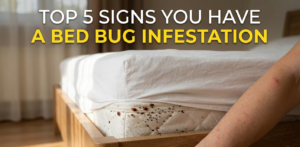
What to look for: Tiny rusty red or brown stains on sheets, pillowcases, or the mattress. These spots appear when you accidentally squash a bed bug that is full of blood, or when a fed bed bug releases excess blood. Over time, these stains oxidize and look reddish-brown.
Where: On your sheets, mattress cover, or pillow near where your body lies. Check especially along seams and corners. The stains are often small – maybe the size of a pinhead. They may smear slightly if wet.
Why it happens: After feeding, bed bugs become engorged and can be crushed under your movement. The expelled blood leaves tell-tale marks on the fabric. EPA and CDC note that rusty or reddish stains on bedding are a key infestation clue
Tip: If you spot a fresh reddish spot, try blotting it: if it spreads, it’s likely blood. Wash and dry the bedding on high heat immediately to kill any bugs or eggs.
Sign 3: Tiny Dark Droppings on Mattress and Furniture
Another thing to to look for Top 5 five signs of bed bug infestation in you home : Tiny black or dark brown spots (like ground pepper or ink drops) on your sheets, mattress, and nearby furniture. These are dried bed bug droppings (digested blood). When wiped with a damp cloth, they may smear a bit. Finding them often means bed bugs have been feeding nearby.
Where: Along mattress seams, box spring edges, cracks in the bed frame or headboard, on bed sheets, and even on walls or baseboards near the bed. They cluster around the bugs’ hiding spots.
Why it happens: As bed bugs feed and move, they defecate. The black specks are composed of digested blood and are very telling. Authorities point out that dark spots on fabric or woodwork are a clear infestation sign. Often droppings are seen alongside shed skins.
Tip: Use a flashlight to inspect seams and crevices closely. If you find these black spots, vacuum the area and seal them in a bag for examination. Also check other rooms – droppings may lead you to hidden bugs elsewhere.
Sign 4: Shed Skins and Tiny White Eggs in Seams
What to look for: Shed exoskeletons (skins) and small pearly-white eggs or eggshells. After each meal, bed bugs molt (shed their skin) up to five times before adulthood, leaving behind semi-transparent shells. Eggs are oval, about 1 mm long, and often stuck in cracks.
Where: Inside mattress seams, box spring fabric, cracks in furniture, behind headboards, or under carpeting edges. Look carefully in mattress tags, under tufts, and in crevices. The shells and eggs are pale and can blend in, but in clusters or along edges.
Why it happens: Each bed bug nymph must shed its skin as it grows. These empty husks accumulate near where bugs hide and breed. Spotting many white skins or eggs is a strong infestation indicator. The CDC specifically lists shed skins as an early sign of bed bugs.
Tip: If you see tiny eggs (they may look like grains of rice) or shells, enclose your mattress in a zippered encasement and wash all bedding. Knowing that eggs take ~4–12 days to hatch, you’ll need follow-up checks.
Sign 5: Live Bed Bugs in Mattress, Furniture, or Walls
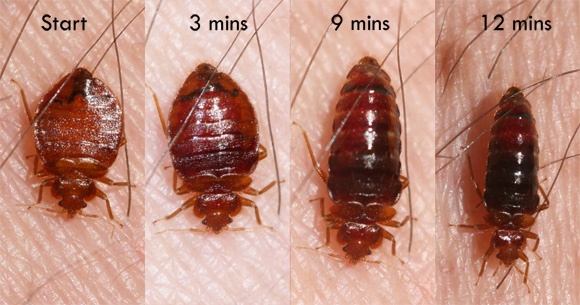
What to look for: Actually seeing bed bugs is irrefutable proof. Adult bed bugs are wingless, flat, and about the size of an apple seed (4–5 mm long). Nymphs are smaller and lighter. They may appear reddish if recently fed, or almost black – Top 5 five signs of bed bug infestation in you home.
Where: In a heavy infestation, you might see bugs wandering on the mattress surface or walls. More often, they hide deep in the bed frame: the seams and piping of the mattress, gaps in the box spring, cracks in the bed frame or headboard They can also hide in couch seams, behind wallpaper, or even in electrical outlets.
Why it happens: Bed bugs come out at night to feed, but in a well-established infestation, you might find them during the day if disturbed. They often cluster in groups in protected spots. Checking for live bugs should focus within 8 feet of where you sleep, since they rarely venture farther when well-fed.
Tip: Inspect your bed with a flashlight and a magnifying glass if possible. Carefully peel back mattress covers and look along seams. Infected items like used furniture often carry adult bugs. If you actually find bugs, contain them (e.g. trap in a jar) and prepare for professional treatment.


Comparison Table of Top 5 Signs You Have Bed Bug Infestation in Your Home
| Sign (Symptom) | Visual Cue | Where Found | Urgency | Immediate Action |
| Itchy Bites on Skin | Red, itchy welts often in lines or clusters. | Face, neck, arms, legs (areas exposed in bed) | High (very common sign) | Wash bites with antiseptic; inspect bedding; apply calamine or antihistamine for itching. |
| Blood Stains on Bedding | Tiny reddish-brown spots on sheets or mattress. | Pillowcases, sheets, mattress seams | Medium-High (fresh sign) | Remove and wash bedding on high heat; examine mattress for more signs. |
| Dark Droppings on Fabric | Small black/brown specks (resembling ink spots) | Mattress seams, box spring, headboard, furniture | High (persistent evidence) | Vacuum areas, seal vacuum bag; use flashlight to inspect and confirm bugs. |
| Shed Skins & Eggs | Pale shed skins/exoskeletons and tiny whitish eggs | Mattress seams, box spring, furniture crevices | High (breeding sign) | Encase mattress; wash any linens; pull furniture away from walls; consider vacuuming. |
| Live Bed Bugs | Actual bugs (flat, reddish-brown, ~5mm long) | Mattress/frame seams, drawer joints, electrical outlets, luggage | Very High (confirmed infestation) | Immediately contact professional pest control for inspection and treatment. |
Immediate Steps if You Find Bed Bug Signs
- Confirm the Signs. Make sure the evidence is really bed bugs (not fleas, carpet beetles, etc.). If possible, capture a sample bug to show an expert or compare online images.
- Isolate Infested Items. Carefully put infested sheets, clothing and blankets into plastic bags and wash them in hot water (at least 60 °C) and dry on high heat. This kills bugs and eggs. Do not shake the items – bed bugs may fall off.
- Vacuum Thoroughly. Vacuum the bed, nearby furniture, and carpet seams. Pay special attention to mattress seams and cracks where eggs hide. Immediately seal and discard the vacuum bag outdoors to prevent escape.
- Encasements and Seals. Encase your mattress and box spring in a high-quality bed bug-proof cover. This traps any bugs inside to starve and prevents new ones from entering. Seal cracks in bed frames, skirting boards and electrical outlets with caulk.
- Call Pest Control. Because bed bugs are notoriously hard to eliminate, it’s best to contact a professional pest control company experienced with bed bugs. Professionals have specialized treatments (insecticides, heat treatment) that can eradicate bugs in all life stages. Be sure to mention the signs you found.
- Treat Bites. For bite symptoms, apply antiseptic lotions or hydrocortisone cream to reduce itching and prevent infection. An antihistamine tablet can also relieve itching. Avoid scratching which can break the skin.
Prevention Tips for Bed Bugs
- Inspect Used Furniture. Before bringing second-hand mattresses, couches or chairs into your home, examine them carefully. Look in seams and crevices for live bugs or droppings.
- Use Mattress and Pillow Encasements. A tightly sealed cover over your mattress and pillows removes hiding spots and makes any bugs easy to spot (the white cover shows dark bugs). Choose a tear-resistant, bed bug–rated encasement.
- Reduce Clutter. Fewer hiding places means easier detection. Keep your bedroom tidy, and vacuum frequently to remove stray bugs.
- Travel Smart. When staying in hotels or guest homes, inspect the bed and headboard for signs. Keep luggage on racks, not on the floor. Upon returning home, wash travel clothing immediately.
- Seal Entry Points. Fill cracks in walls, floors, and around pipes. Bed bugs can crawl between apartments or rooms. Door sweeps and sealed holes slow their movement.
- Regular Checks. Periodically lift mattress and check seams, especially if you travel often. Early detection is best – a few bugs caught early are easier to handle than a full infestation.


Conclusion and Call to Action
Bed bug infestations can happen to anyone and grow fast if unnoticed. By watching for the top five signs above, Lagos homeowners can catch problems early.
If you see any of these clues – bites, blood spots, dark specks, shed skins or live bugs – take action immediately. Start cleaning and isolating items, but also call a trusted pest control professional for a thorough inspection and treatment.
Experts can confirm the infestation and apply safe, effective methods to eliminate bed bugs for good. Don’t wait: the sooner you respond, the easier (and cheaper) it is to restore a bed bug–free home. For more information and help, see resources from the CDC and local pest control services. Sweet dreams and stay pest-free!
References:
Bedbugs – Symptoms and causes – Mayo Clinic – https://www.mayoclinic.org/diseases-conditions/bedbugs/symptoms-causes/syc-20370001
How to Find Bed Bugs | US EPA – https://www.epa.gov/bedbugs/how-find-bed-bugs
About Bed Bugs | Bed Bugs | CDC – https://www.cdc.gov/bed-bugs/about/index.html
Protecting Your Home from Bed Bugs | US EPA – https://www.epa.gov/bedbugs/protecting-your-home-bed-bugs