Table of Contents
Introduction
In recent years, the world has learned painful lessons from deadly infectious diseases. Ebola devastated families and health systems, especially during the 2014–2016 West African outbreak, which recorded over 28,000 cases and more than 11,000 deaths. COVID-19, caused by the coronavirus SARS-CoV-2, spread globally and led to millions of confirmed deaths, with WHO data tracking deaths reported by countries worldwide.
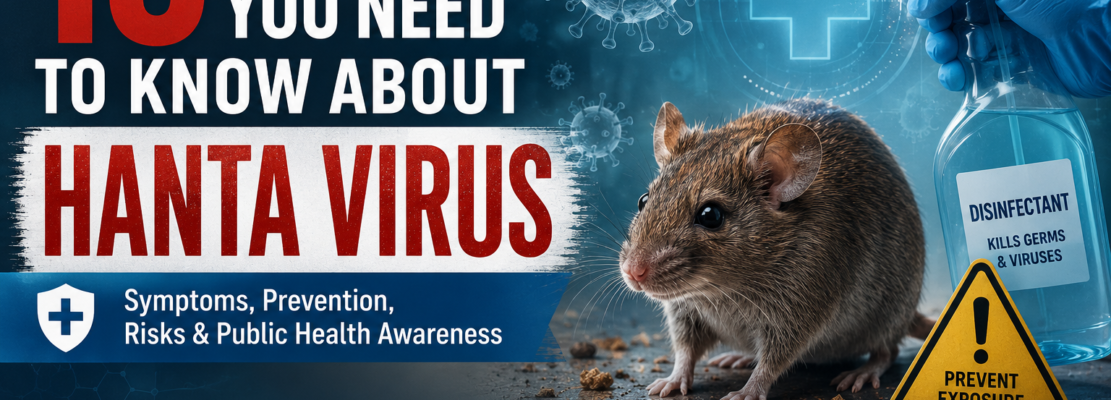
These outbreaks remind us that disease awareness is not optional. It is a life-saving responsibility. One disease that deserves more public attention is Hanta Virus. Therefore, the puropse of this article – 10 Things You Need to Know About Hanta Virus. Although it is not as widely discussed as Ebola or Coronavirus, Hanta Virus can be severe, sudden, and deadly when exposure is not prevented or when symptoms are ignored.
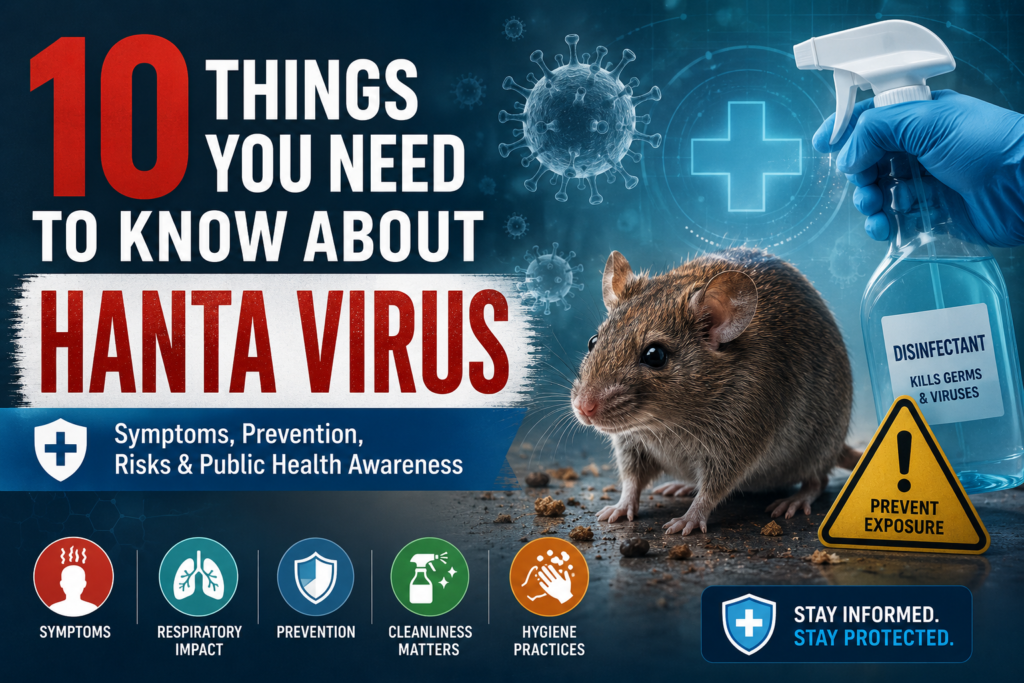
10 Things You Need to Know About Hanta Virus
1. Hanta Virus is mainly linked to rodents
The first thing to know about Hanta Virus is that it is usually connected to rodents such as rats and mice. According to the CDC, people can become infected through contact with infected rodents, especially their urine, droppings, and saliva. Infection may also occur through rodent bites or scratches, although this is rare.
This means Hanta Virus is not usually a disease people catch from casual contact in offices, churches, markets, or schools. The bigger danger is exposure to contaminated environments, especially places where rodents live, nest, feed, or leave waste.
2. Hanta Virus spreads mostly through contaminated dust
Many people think infection requires touching a rat directly, but that is not always the case. Hanta Virus can spread when dried rodent urine, droppings, or saliva become mixed with dust and are inhaled. This can happen while sweeping, cleaning, moving old boxes, entering abandoned rooms, or disturbing rodent nests.
The European Centre for Disease Prevention and Control explains that inhalation of contaminated aerosols from rodent waste is a main route of transmission.
This is why dry sweeping a rodent-infested room can be risky. The safer approach is to ventilate the area, wet contaminated surfaces with disinfectant, wear protection, and avoid raising dust.
3. Hanta Virus can cause two major forms of illness
Hanta Virus infections do not always look the same. In some parts of the world, they are associated with Hantavirus Pulmonary Syndrome, a severe illness that affects the lungs and can lead to breathing failure. In other regions, hantaviruses may cause Haemorrhagic Fever with Renal Syndrome, which can affect the kidneys and cause fever, bleeding problems, and shock.
WHO describes hantavirus infection as rare but potentially severe and deadly.
This is one reason Hanta Virus must be taken seriously. It may begin like an ordinary fever, but in severe cases, it can quickly become a medical emergency.
4. Early symptoms may look like common infections
One dangerous thing about Hanta Virus is that early symptoms may not immediately reveal the seriousness of the disease. A person may develop fever, tiredness, muscle aches, headache, dizziness, chills, nausea, vomiting, diarrhoea, or abdominal pain. These symptoms can be mistaken for malaria, influenza, typhoid, food poisoning, or other common illnesses.
The problem is that some patients later develop severe breathing difficulty, coughing, chest tightness, low blood pressure, and fluid build-up in the lungs. At that point, urgent medical care is needed.
In any situation where fever follows possible rodent exposure, Hanta Virus should be considered, especially if breathing problems appear.
5. Hanta Virus is not the same as Ebola or Coronavirus
It is important not to confuse Hanta Virus with Ebola or Coronavirus. Ebola is well known for severe bleeding, organ failure, and very high fatality in some outbreaks. WHO states that Ebola has an average case fatality rate of around 50%, though past outbreaks have ranged from 25% to 90%.
Coronavirus, especially COVID-19, was different because it spread efficiently from person to person through respiratory particles, leading to a global pandemic.
Hanta Virus, by contrast, is primarily associated with rodent exposure. Some specific hantaviruses, such as Andes virus, have shown limited person-to-person transmission in previous outbreaks, but this is uncommon. WHO currently describes global risk from a recent multi-country cluster as low while continuing to monitor the situation.
So, while Ebola, Coronavirus, and Hanta Virus can all be deadly, their sources, transmission patterns, and public-health responses differ.
6. Hanta Virus can kill, but it is preventable
The seriousness of Hanta Virus lies in its ability to progress rapidly once severe disease begins. In serious pulmonary cases, patients may need oxygen, intensive care, mechanical ventilation, or advanced support. However, prevention is very possible because the main risk factor is known: rodent exposure.
This makes environmental hygiene extremely important. Homes, offices, stores, farms, warehouses, camps, and abandoned buildings should be protected from rodents. Food should be stored properly. Waste should be disposed of quickly. Holes and cracks should be sealed. Clutter should be removed because it gives rodents places to hide.
In public health, prevention is often more powerful than treatment. This is especially true for Hanta Virus.
7. There is no simple home cure for Hanta Virus
Another important fact about Hanta Virus is that it should not be managed casually at home when symptoms are serious. There is no simple herbal cure, home mixture, or over-the-counter medicine that can reliably treat severe hantavirus disease.
Treatment is mainly supportive, meaning doctors manage symptoms and support the body while it fights the infection. This may include oxygen therapy, fluids, blood-pressure support, kidney support, or intensive care depending on the form and severity of illness.
Anyone with fever, weakness, and breathing difficulty after rodent exposure should seek urgent medical attention. Waiting too long can be dangerous.
8. Safe cleaning can reduce the risk of Hanta Virus
Cleaning is good, but unsafe cleaning can increase exposure. To reduce the risk of Hanta Virus, avoid sweeping or vacuuming dry rodent droppings. Instead, ventilate the room, wear gloves and a mask where appropriate, spray contaminated areas with disinfectant, allow it to soak, then wipe carefully.
Rodent-contaminated materials should be disposed of safely. Hands should be washed thoroughly after cleaning. Children should be kept away from contaminated areas. Food preparation surfaces should be disinfected.
For businesses, churches, schools, and offices, regular pest control and professional cleaning are not luxuries; they are preventive health measures. Hanta Virus reminds us that poor environmental sanitation can become a medical threat.
9. Communities need awareness, not panic
The right response to Hanta Virus is awareness, not panic. Panic leads to rumours, stigma, and wrong decisions. Awareness leads to prevention, early care, and responsible public-health action.
The world saw the cost of fear and misinformation during Ebola and Coronavirus outbreaks. During Ebola, some communities delayed reporting cases because of fear. During COVID-19, misinformation about vaccines, treatments, masks, and transmission caused confusion and unnecessary deaths.
For Hanta Virus, the message should be clear: control rodents, clean safely, avoid exposure to rodent waste, and seek medical care early if symptoms appear after exposure.
10. Hanta Virus is a reminder that public health begins at home
The final lesson is that Hanta Virus is not only a hospital issue. It is also a home, workplace, and community issue. Public health begins with clean surroundings, safe food storage, proper waste disposal, pest control, and early medical attention.
Ebola taught the world the importance of outbreak readiness, protective equipment, contact tracing, and trust in health workers. Coronavirus taught the world how quickly infections can disrupt families, businesses, worship centres, schools, economies, and nations. Hanta Virus teaches another lesson: even diseases that do not dominate the headlines can be deadly when people ignore basic prevention.
Conclusion
Hanta Virus may be rare, but it is serious. It is mainly linked to infected rodents and their urine, droppings, and saliva. It can spread through contaminated dust, cause severe lung or kidney disease, and become life-threatening if not treated early. Unlike Coronavirus, it is not generally known for easy global person-to-person spread. Unlike Ebola, it is not mainly associated with direct contact with the blood or body fluids of infected patients. Its major danger is environmental exposure.
The best protection against Hanta Virus is prevention: keep rodents away through fumigation, clean safely, store food properly, seal entry points, dispose of waste correctly, and seek medical care when symptoms follow possible exposure. The deaths caused by Ebola and Coronavirus should remind us never to take infectious diseases lightly. Knowledge saves lives, and in the case of Hanta Virus, simple preventive actions can make the difference between safety and tragedy.